
Learn


Lead

Connect




Learn

understand the Midterms
Get ready to vote
resources
Lead
connect
Get involved
Stay connected

The five types
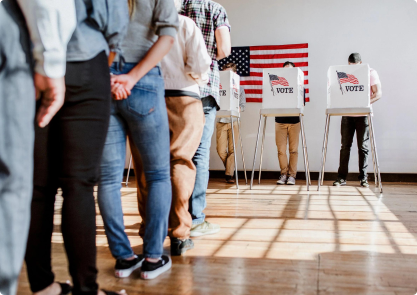
Texas holds five distinct types of elections. Each serves a different purpose, happens at a different time, and has different rules for who can participate. The one ahead of us is the November 3 general election.

A primary election is how each political party chooses its candidate for the general election. Think of it as the opening round. The field of candidates narrows down to one per party before the November vote. In Texas, primaries are held in March of even-numbered years. In 2026, the primary was on March 3.
What is a provisional ballot?
A provisional ballot allows you to still vote. After Election Day, officials investigate whether you were eligible and registered. If you were, your vote gets counted.

A primary runoff happens when no candidate in a primary race received more than 50% of the vote. The top two finishers face off one more time, head to head, winner take all. In 2026, the runoff was held in May, well before the November general.

The general election is the one most people think of when they hear "Election Day." It's where party nominees face each other, along with any independent or third-party candidates, to decide who actually holds public office. This November is a midterm, so the entire ballot is up and down the state.
In Texas, general elections are held on the first Tuesday after the first Monday in November of even-numbered years. In 2026, that's November 3.
The most important deadline comes early. You must be registered by October 5 to vote in November. Confirm your status at VoteTexas.gov and sign up for our election updates newsletter so you never miss a date.

A special election is called outside the regular election calendar to fill a vacant seat or decide a specific issue, such as a resignation, a death in office, or a statewide ballot measure that can't wait until November.
Special elections in Texas are called by the Governor and can happen at almost any time of year.
Pay attention to special elections. Because they're unscheduled, they often fly under the radar. Check your county election office's website or VoteTexas.gov to stay informed.

Local elections decide who runs the things that affect your daily life most directly: your schools, roads, property taxes, emergency services, and water systems. These races often get the least attention and have the lowest turnout, which means your vote goes further here than almost anywhere else.
In Texas, most local elections are held in May of odd-numbered years, but the exact timing varies by jurisdiction. Some cities and school districts hold elections at different times, and some local races also appear on the November general election ballot.
Mayors, city council members, county commissioners, sheriffs, and judges
School board trustees who set policy, approve budgets, and hire superintendents
Water districts, hospital districts, community college boards, and transit authorities
Find your local election officials
Every Texas county has a voter registrar who can tell you about local elections in your area. Find your county's contact information through the Texas Secretary of State's directory. You can also check VoteTexas.gov for upcoming elections in your county.
How they fit together
Texas holds five distinct types of elections. Each serves a different purpose, happens at a different time, and has different rules for who can participate. The one ahead of us is the November 3 general election.
Step 1
Multiple candidates compete within each party. Anyone who clears 50% wins their party's nomination outright. If nobody does, the top two advance.
Step 2
If you are in line by 7:00 PM when the polls close, you are legally allowed to vote. The top two candidates from March face off again. Whoever wins becomes their party's official nominee heading into November.
Step 3
The party nominees face each other to decide who holds office. This is the election ahead of us, and the one where the whole ballot is decided.
Special and local elections can occur at any point in this calendar. Keep an eye on VoteTexas.gov and your county election office for any elections in your area throughout the year.than you think. Sign up for updates and we'll make sure you never miss the date that matters, starting with the October 5 registration cutoff.
The basics
This November, Texas decides on the governor, a U.S. Senate seat, and every statewide office. There's a lot of time between now and then, and a few deadlines you don't want to miss. Sign up for election updates and we'll send the reminders that matter, right when they matter.

Common Questions
A few things thst come up often about the mail ballot process in Texas.
No. The November 3 general election is not a party primary. Every registered voter receives the same general-election ballot for their districts, so there's no party ballot to choose. Your limited ballot simply covers the races shared by your old and new county.
No. Limited ballots are only available during the early voting period, October 19–30, 2026, at the main early voting polling place in your new county. They are not available on Election Day (November 3).
If you miss the early voting window, your only option on Election Day would be to return to your old precinct in your former county, but only if you still live within the political subdivision holding that election.